Showing posts with label back. Show all posts
Showing posts with label back. Show all posts
Saturday, May 10, 2014
Were Back From Turkey
Hello! Were back! Goodness, 35 days is a long time to be gone. Turkey was a wonderful, marvellous place, but thanks to some health problems we had kind of a mixed time, and Im still feeling very discombobulated even though weve been back almost a week.
But what you want to know is more about Turkish food and what we ate...!

We enjoyed visiting a lot of farmers markets in Turkey. This one is in Kaş, and I really like this photo because it says so much about Turkey. Theres the ancient Lycian tomb, just sitting around and getting in the way, theres the new condos going up in the background, theres the damn smoker who is sure to be found stinking up the air everywhere. And to be sure, theres the great selection of Turkish-grown foods, many of them quite local as far as I could tell.

I love this photo too. I love the rich colours, the selection of unfamiliar elmas, er, I mean apples, the delicious fresh oranges and bananas, and the magnificent artichokes being sold on their stems. You could put those in a vase they are so gorgeous.

We saw these pumpkins all over the place. They are usually sliced and cooked in syrup and served as a dessert, and we ate some that way. This market was in Ayvalik, and it was amazingly huge. In addition to the very large central farmers market, the surrounding streets were full of textile vendors of all kinds.

I was a bit amused to discover that corn is a popular street food. I suspect this was grown in greenhouses on the south coast, but it was being sold in Istanbul. It was boiled, then cooked on a grill, and sold for £1.50, or about a dollar a cob. We didnt buy it this way, but a few times when Mr. Ferdzy needed a snack, he bought a little cup of corn kernels. That, I suspect, was purchased by the vendors as frozen corn. It was strangely more expensive, generally selling for £3 for a small cup. I didnt get any good photos, but chestnuts cooked on a charcoal grill were another really popular street food.

All kinds of things get sold in the streets. We saw this candy setup a few times. Each segment of the tray contains soft sweet taffy tinted different colours, and perhaps different flavours (we didnt actually try this) which are swirled together onto a stick and doused with lemon juice. It looked like a lot of fun, actually!

But we saved our calories for this stuff. Lokum, or as it gets called here, Turkish Delight. We tried several brands and this was the one we liked the best. Also the most expensive; funny how that works. The good news is that I like the smooth nutless fruit flavours the best, and being nutless they were the least expensive. That towel in the background, by the way, is what we really spent our money on. Handwoven towels from Jennifers Hamam; they are amazing!

Heres something we ate quite often. Gözleme are a kind of stuffed pancake, cooked on a griddle. Usually they have cheese with a bit of greenery of some kind, but you can often find them filled with spinach or meat. I also had some with a potato and vegetable puree in them. We got them in fancy restaurants, with some of our breakfasts, in little specialty hole-in-the-wall shops, at the bus stop, and here they are at a farmers market.

Many people roll out the pancakes for gözleme themselves, but it looks like you could buy them ready-made and put your own fillings in them.

Here they are being made in a little shop in Antalya that specialized in savory pastries, along with something else, although I dont know what the something else was, besides being another savory pastry filled with cheese. I ate waaaaaay too much wheat and cheese in Turkey, and it did not entirely agree with me, even though I enjoyed it a lot. It was very hard to avoid as both wheat and dairy products are big, big staples in Turkey.

Heres what we bought: a cheese and spinach gözleme, a cheese borek (the snail shaped one although we got ours cut in half for sharing purposes) and another pastry, the name of which escapes me, which contained cheese (surprise!) and mint. The Turks use fresh mint quite a lot as a savory seasoning, and I intend to follow their example more often - its good! But you see what I mean about too much wheat and cheese...

More wheat, this time in the form of bread. Most of it was light and fluffy and much like what I think of as "French" bread. We did get some whole wheat bread, but it was somewhat unusual. We rarely had bad bread though; most of it was delicious.

One of the ways in which we got too much wheat and cheese was in the customary Turkish breakfast. Bread and cheese were the foundation of them, along with olives, cucumbers and tomatoes. There was generally also butter, jam and honey, fruit if you were in a classy joint, hard boiled eggs and perhaps also some eggs custom cooked in the aforementioned classy joints, juices of varying qualities and tea. Coffee sometimes showed up but oddly enough, given the fame of Turkish coffee, the Turks are not big coffee drinkers. Tea rules completely, flowing from breakfast to bedtime, sold in the street, served on the buses, and given away by shopkeepers because you couldnt possibly get through the shopping negotiations without some çay to keep you going! And it will keep you going, because they make it so strong you practically have to snip it off as it comes out of the spout. They follow the tea making instructions here, pretty much. Wow!

Heres a closer look at this particularly impressive breakfast spread. This one included fresh herbs, lettuce and peppers, as well as a couple of salads and a really wonderful hot pepper paste. This was at the Heybe Hotel in Goreme.

We ordered dolmas several times. Dolmas just means stuffed and the Turks stuff every vegetable stuffable, pretty much, but if its just dolmas its grape leaves. The ones we had were all much smaller, more tender leaves than Ive ever seen before. It made the dolmas tiny; just a mouthful or two each. I thought they were fabulous, but it must make them very labour-intensive to make. As here, they are usually served with yogurt and some sort of seasoning. This one, I think, was sumac based.

Heres one of our lunches. I want to go on record as saying I did not request that big plate of plain meat; Mr. Ferdzy did that. Then he took a bite and discovered it was Liver Albanian Style. Oops. I did not let him suffer but swapped my chicken in a cream sauce with vegetables for it. In general though, Turkish meals were not too meat heavy and included lots of vegetable dishes. We also ate a lot of çorba, otherwise known as soup. It was usually lentil, or tomato, unless it was lentil and tomato, although a few other types could occasionally be had.

Another typical meal: rice, which came garnished with a few surprise beans, spinach with carrots and garlic and a dollop of yogurt, a stewed eggplant dish and a very typical salad. Usually this came with grilled meat (döner) dishes, but I would eat it whenever I could get it. Its just romaine lettuce topped with grated carrots, grated mild winter radish, and red cabbage marinated in a light dressing then the whole thing dressed with a little lemon juice and olive oil. Loved it.

This was fun too. We got this meal near the Egyptian spice market in Istanbul, but barbecued chicken was quite common. This was a mix of wings and thighs, with a half a barbecued onion, salad, pilaf (which was usually a blend of rice, cracked wheat and barley tinted yellowish-red) and a nice little salad garnished with a (HOT!) pickled pepper. A more mid-range hot dried red pepper served on the side along with an herb mix to sprinkle on your food if you liked. All of this was extremely typical. We had few dishes that were spicy-hot when they arrived at the table (just a few soups) but there was almost always a hot pepper garnish either dry or pickled available.
With the exception of soups, most of the foods we expected to arrive at the table hot (in the sense of temperature) were... not. Tepid to lukewarm was the general range. I can see this being a good idea in the summer, when it hits 40°C, but we found it a bit disconcerting and often would have enjoyed the food more if it had been hotter.
Still, Turkish food in general was very good and I have come home with lots of plans and recipes I want to chase after. Certainly, Turkish street food and fast food was almost always far, far better than anything you will get here if you want to eat on the run. Ill have one more post about Turkey, I think; just some more pictures of the marvellous farmers markets we visited.
Read More..
But what you want to know is more about Turkish food and what we ate...!
We enjoyed visiting a lot of farmers markets in Turkey. This one is in Kaş, and I really like this photo because it says so much about Turkey. Theres the ancient Lycian tomb, just sitting around and getting in the way, theres the new condos going up in the background, theres the damn smoker who is sure to be found stinking up the air everywhere. And to be sure, theres the great selection of Turkish-grown foods, many of them quite local as far as I could tell.
I love this photo too. I love the rich colours, the selection of unfamiliar elmas, er, I mean apples, the delicious fresh oranges and bananas, and the magnificent artichokes being sold on their stems. You could put those in a vase they are so gorgeous.
We saw these pumpkins all over the place. They are usually sliced and cooked in syrup and served as a dessert, and we ate some that way. This market was in Ayvalik, and it was amazingly huge. In addition to the very large central farmers market, the surrounding streets were full of textile vendors of all kinds.
I was a bit amused to discover that corn is a popular street food. I suspect this was grown in greenhouses on the south coast, but it was being sold in Istanbul. It was boiled, then cooked on a grill, and sold for £1.50, or about a dollar a cob. We didnt buy it this way, but a few times when Mr. Ferdzy needed a snack, he bought a little cup of corn kernels. That, I suspect, was purchased by the vendors as frozen corn. It was strangely more expensive, generally selling for £3 for a small cup. I didnt get any good photos, but chestnuts cooked on a charcoal grill were another really popular street food.
All kinds of things get sold in the streets. We saw this candy setup a few times. Each segment of the tray contains soft sweet taffy tinted different colours, and perhaps different flavours (we didnt actually try this) which are swirled together onto a stick and doused with lemon juice. It looked like a lot of fun, actually!
But we saved our calories for this stuff. Lokum, or as it gets called here, Turkish Delight. We tried several brands and this was the one we liked the best. Also the most expensive; funny how that works. The good news is that I like the smooth nutless fruit flavours the best, and being nutless they were the least expensive. That towel in the background, by the way, is what we really spent our money on. Handwoven towels from Jennifers Hamam; they are amazing!
Heres something we ate quite often. Gözleme are a kind of stuffed pancake, cooked on a griddle. Usually they have cheese with a bit of greenery of some kind, but you can often find them filled with spinach or meat. I also had some with a potato and vegetable puree in them. We got them in fancy restaurants, with some of our breakfasts, in little specialty hole-in-the-wall shops, at the bus stop, and here they are at a farmers market.
Many people roll out the pancakes for gözleme themselves, but it looks like you could buy them ready-made and put your own fillings in them.
Here they are being made in a little shop in Antalya that specialized in savory pastries, along with something else, although I dont know what the something else was, besides being another savory pastry filled with cheese. I ate waaaaaay too much wheat and cheese in Turkey, and it did not entirely agree with me, even though I enjoyed it a lot. It was very hard to avoid as both wheat and dairy products are big, big staples in Turkey.
Heres what we bought: a cheese and spinach gözleme, a cheese borek (the snail shaped one although we got ours cut in half for sharing purposes) and another pastry, the name of which escapes me, which contained cheese (surprise!) and mint. The Turks use fresh mint quite a lot as a savory seasoning, and I intend to follow their example more often - its good! But you see what I mean about too much wheat and cheese...
More wheat, this time in the form of bread. Most of it was light and fluffy and much like what I think of as "French" bread. We did get some whole wheat bread, but it was somewhat unusual. We rarely had bad bread though; most of it was delicious.
One of the ways in which we got too much wheat and cheese was in the customary Turkish breakfast. Bread and cheese were the foundation of them, along with olives, cucumbers and tomatoes. There was generally also butter, jam and honey, fruit if you were in a classy joint, hard boiled eggs and perhaps also some eggs custom cooked in the aforementioned classy joints, juices of varying qualities and tea. Coffee sometimes showed up but oddly enough, given the fame of Turkish coffee, the Turks are not big coffee drinkers. Tea rules completely, flowing from breakfast to bedtime, sold in the street, served on the buses, and given away by shopkeepers because you couldnt possibly get through the shopping negotiations without some çay to keep you going! And it will keep you going, because they make it so strong you practically have to snip it off as it comes out of the spout. They follow the tea making instructions here, pretty much. Wow!
Heres a closer look at this particularly impressive breakfast spread. This one included fresh herbs, lettuce and peppers, as well as a couple of salads and a really wonderful hot pepper paste. This was at the Heybe Hotel in Goreme.
We ordered dolmas several times. Dolmas just means stuffed and the Turks stuff every vegetable stuffable, pretty much, but if its just dolmas its grape leaves. The ones we had were all much smaller, more tender leaves than Ive ever seen before. It made the dolmas tiny; just a mouthful or two each. I thought they were fabulous, but it must make them very labour-intensive to make. As here, they are usually served with yogurt and some sort of seasoning. This one, I think, was sumac based.
Heres one of our lunches. I want to go on record as saying I did not request that big plate of plain meat; Mr. Ferdzy did that. Then he took a bite and discovered it was Liver Albanian Style. Oops. I did not let him suffer but swapped my chicken in a cream sauce with vegetables for it. In general though, Turkish meals were not too meat heavy and included lots of vegetable dishes. We also ate a lot of çorba, otherwise known as soup. It was usually lentil, or tomato, unless it was lentil and tomato, although a few other types could occasionally be had.
Another typical meal: rice, which came garnished with a few surprise beans, spinach with carrots and garlic and a dollop of yogurt, a stewed eggplant dish and a very typical salad. Usually this came with grilled meat (döner) dishes, but I would eat it whenever I could get it. Its just romaine lettuce topped with grated carrots, grated mild winter radish, and red cabbage marinated in a light dressing then the whole thing dressed with a little lemon juice and olive oil. Loved it.
This was fun too. We got this meal near the Egyptian spice market in Istanbul, but barbecued chicken was quite common. This was a mix of wings and thighs, with a half a barbecued onion, salad, pilaf (which was usually a blend of rice, cracked wheat and barley tinted yellowish-red) and a nice little salad garnished with a (HOT!) pickled pepper. A more mid-range hot dried red pepper served on the side along with an herb mix to sprinkle on your food if you liked. All of this was extremely typical. We had few dishes that were spicy-hot when they arrived at the table (just a few soups) but there was almost always a hot pepper garnish either dry or pickled available.
With the exception of soups, most of the foods we expected to arrive at the table hot (in the sense of temperature) were... not. Tepid to lukewarm was the general range. I can see this being a good idea in the summer, when it hits 40°C, but we found it a bit disconcerting and often would have enjoyed the food more if it had been hotter.
Still, Turkish food in general was very good and I have come home with lots of plans and recipes I want to chase after. Certainly, Turkish street food and fast food was almost always far, far better than anything you will get here if you want to eat on the run. Ill have one more post about Turkey, I think; just some more pictures of the marvellous farmers markets we visited.

Wednesday, April 9, 2014
Just Arrived in Healdsburg Be Back Monday!
We just arrived for our weekend of work, wine, and wonderment. Hopefully Ill be able to chime in at some point, but if not, well be back Monday with some photos and maybe a few war stories. Cheers!
Read More..
Friday, March 14, 2014
My Im Back Baby! Bordelaise Sauce
 I just got back into San Francisco last night after a fun, hot, and too-short visit with my family in upstate New York. Its hard to keep posting new video recipes when youve been traveling as much as I have, but luckily I had some footage saved from a delicious Bordelaise sauce I made when we tested the dry-aged beef.
Bordelaise sauce is one of those classic old school sauces that many chefs learn in culinary school, and then unless they end up working in a traditional French restaurant, or maybe some large hotel, they dont really make on a regular basis. Its a shame since this is such a fantastic sauce, and really very easy to make. When you factor in the availability of really good, really affordable red wine at the local market, this sauce makes even more sense.
The one key ingredient youll need to track down is a nice rich (and real) veal stock. Many of your higher-end grocery chains now sell it, but you may have to ask a local butcher to find you some. There are NO thickeners in this sauce. It is simply reduced until concentrated. Substituting beef broth just will not cut it, since we are relying on the gelatin in the stock to give us the beautiful sticky viscosity the sauce is known for.
 I mention in the video that real, classic Bordelaise usually calls for the addition of beef marrow to add richness to the sauce. Ive had it that way, and it is wonderful, but this version is very nice also, even without that unctuous addition.
One problem with this post is no real "money shot." I was so busy that day with filming the potatoes and dry-aged beef test that I never took any decent pictures of the sauce! That explains the flickr photo I found (credits below), and recycled photo from the dry-age post. Photo esthetics notwithstanding, this is a great sauce recipe, which I hope you try soon. Enjoy!
Ingredients:
1 tsp butter
4 large shallots
salt and fresh ground black pepper to taste
1 cup good red wine
2 cups real veal stock
Top Photo (c) Flickr user adactio
Steak on Fork Photo (c) ChezUs
Saturday, February 15, 2014
Back with Poha Idlis for WBB Grains in my breakfast
 If I told you that this tambram girl has never been able to make fluffy idlis from the scratch, would you believe me? Well it was the case until I tried out Sanjeev Kapoors Poha Idlis that featured the Healthy Breakfast episode in the near past.
They turned out white, soft, fluffy - and these are perfect for people like me - from whom the perfect idlis have been largely elusive.
I followed the recipe to the T. And theres no reason why these should make perfect dosas or Uthapams. I can swear I downloaded the pics from the camera and its odd how I cant seem to find them in my quite empty formatted notebook.
The picture will be updated the next time I make them, which I promise will be soon.
The recipe is from Sanjeev Kapoors website, where each weeks episode recipes are displayed for two weeks and I copied them down before they vanished. The recipe yields about a dozen medium idlis, and you can easily double the recipe to make dosas the next day.
POHA IDLI
Recipe Source : Sanjeev Kapoor / Khana Khazana
Preparation Time : 10 hours
Cooking Time : 30 minutes
Ingredients
1/4 cup Pressed Rice (poha)
1 cup Rice rawa (idli rawa)
1/4 cup Split black gram skinless (dhuli urad dal)
Salt to taste
Oil for greasing
Method
Soak idli rawa and poha in water for two hours.
Wash urad dal and soak in water for two hours.
Grind idi rawa and poha with a little water to a smooth batter. Transfer into a bowl.
Then grind urad dal separately to a smooth paste using little water. Transfer into the same bowl. Mix the two batters and allow set aside to ferment for eight to ten hours.
Heat sufficient water in a steamer. Grease the idli moulds. Add salt to the batter and mix well. Adjust consistency. Pour spoonful of batter into the moulds and place them in the steamer. Steam for about ten minutes or till done. If a skewer inserted into an idli comes out clean, the idlis are done. Take the moulds out and set aside to cool slightly before demoulding the idlis. Serve hot with chutney and sambhar.
This is my submission for WBB - Grains in my breakfast hosted by Aparna of My Diverse Kitchen.
Monday, February 10, 2014
Who Dat Flying Back to San Francisco
 Michele and I will be heading back to San Francisco this evening after a very, very cool (everything except the weather, that is) trip to New Orleans! Ill have some photos to share with yall, and there will undoubtedly be several NOLA-inspired video recipes to follow.
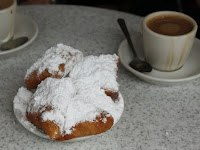 Thanks to all yall who emailed and posted comments with suggestions on where to eat and what to do. As usual on these press trips, the schedule was pretty tight, so we didnt have a lot of time to explore them all, but we loved the city and will be back, for sure.
Yall stay tuned for a brand new video on the blog tomorrow. Wow, I cant believe Ive picked up the accent after only 3 days!
Subscribe to:
Posts (Atom)